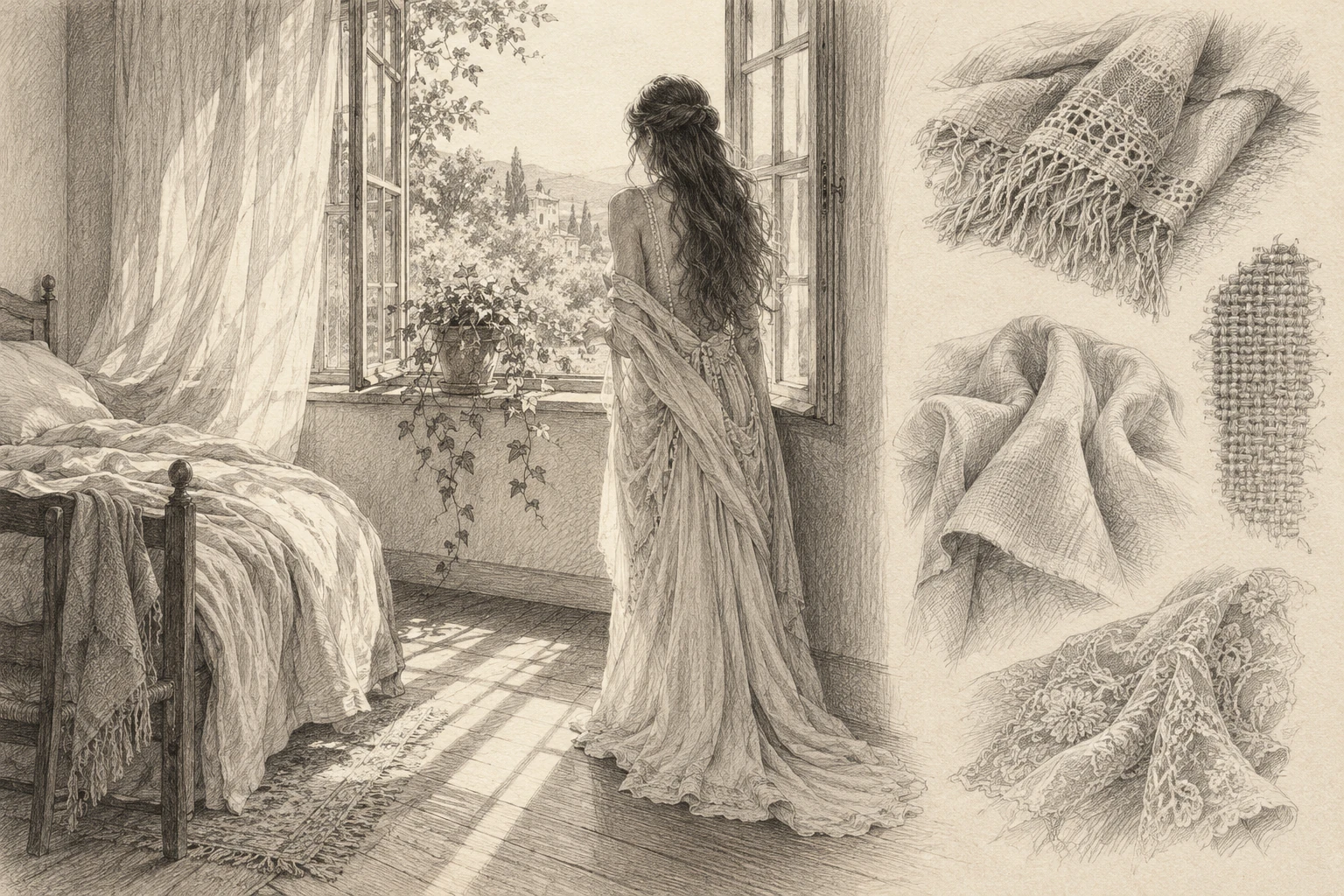
The window frame was the easiest part to draw because I could look at it again in daylight. The figure beside it was more difficult. I worked from the room outward: the sill, the folds of the curtain, the plant whose leaves leaned toward the glass. Giving the remembered visitor a precise place to stand seemed more useful than beginning with her face.
The cloth studies on the right are attempts to remember the weave of her clothing. It became visible when she moved. I made several little tests with a soft pencil and a harder one, looking for a way to suggest a pattern finer than the drawing itself could reproduce. The darkest swatch is the least accurate, but it helped me understand the lighter ones.
I left the bed partly visible because the encounter did not happen in a grand chamber. It occurred among laundry and a notebook left open on a desk. When I remove those things, the picture becomes more impressive and less personal. The room is part of the account. It is where I had to decide whether I wanted to stay.
The figure is shown from behind in this version. That was a deliberate limit. I remembered the fall of the clothing and the angle of her head more confidently than her expression during this particular moment. There are other studies of her face. This page did not need to pretend it could preserve everything at once.
The account linked below describes the small courtesy I could not draw: she had moved away from the door. It changed how the room felt. I do not know whether a viewer will see that space in this page without being told. I have kept the opening clear anyway.
Read the associated journal chapter →